
Born from Lived Experience
Re-Leaf Africa Initiative grew from the banks of River Gura, a personal journey through climate loss, community resilience, and the will to build something better.
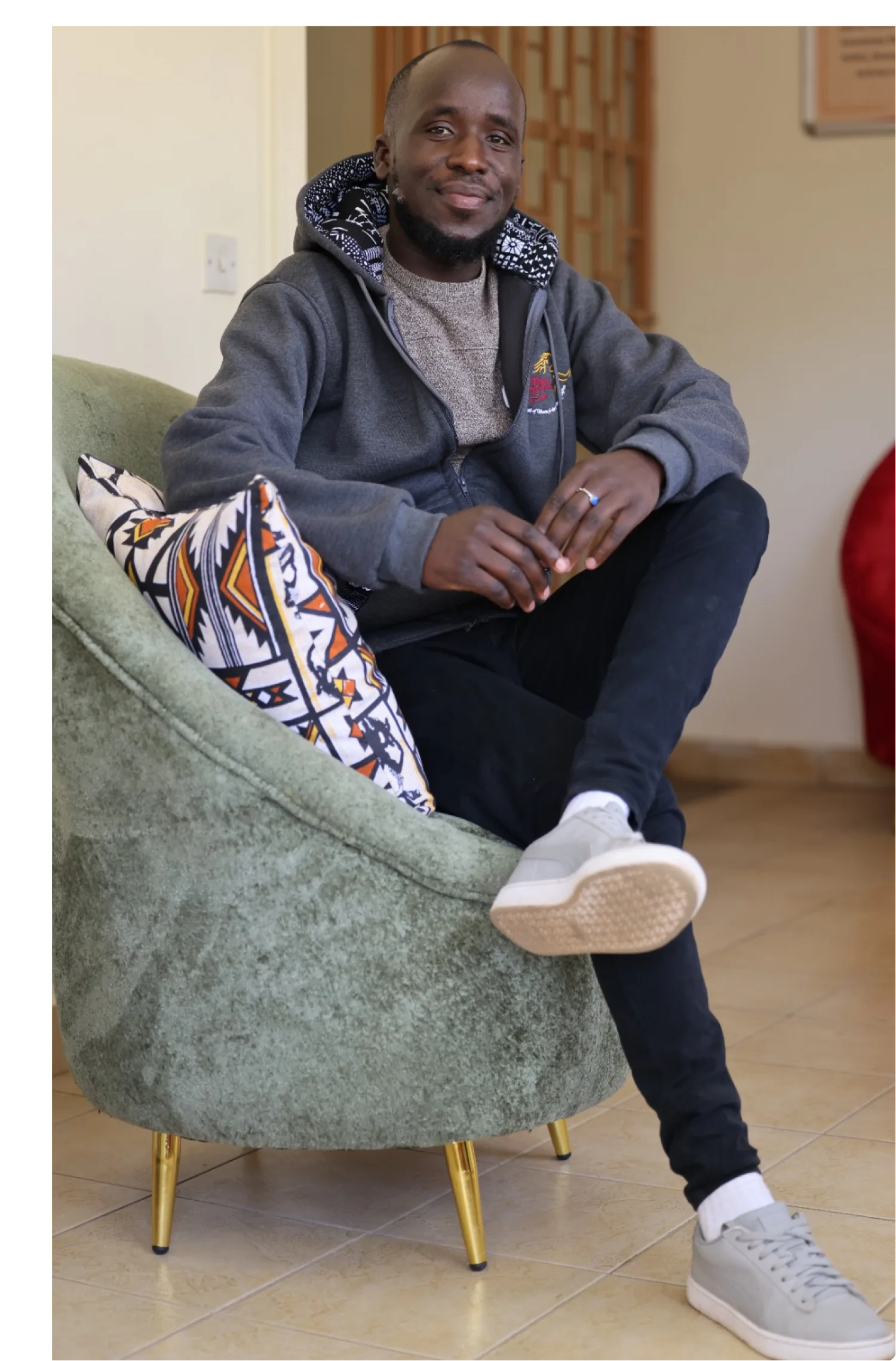
Founder's Story
I grew up along the banks of River Gura, one of Africa's fastest-flowing rivers, in rural Kenya. As a farmer, I witnessed firsthand how climate change was transforming the environment around us. What was once productive farmland became increasingly vulnerable to extreme weather events.
During periods of prolonged rainfall, River Gura would flood and erode large sections of agricultural land. One of my sugarcane plantations was swept away by the river's powerful currents, causing significant losses to my family and community. At the same time, changing rainfall patterns brought longer dry seasons, rising temperatures, and declining crop yields. Seasons became unpredictable, and farming became increasingly difficult.
Seeking opportunities, I later moved to the outskirts of Nairobi, only to experience another side of the climate crisis. Flooding affected residential areas, livelihoods, and vulnerable communities living in urban settlements. Whether in rural or urban areas, the impacts of climate change were impossible to ignore.
My understanding deepened when I joined Women's Empowerment Link (WEL), where I became actively involved in climate justice programming. Through this work, I began connecting the dots between climate change, biodiversity loss, climate finance, and the critical role of youth and women in restoration and regeneration efforts.
In 2023, I founded HER-YA (Her Earth and Youth in Agriculture) to mobilize, educate, and accelerate climate action at the community level. Through community engagement activities, we mobilized over 100 community members around regenerative agriculture, river restoration, and environmental stewardship.
However, one challenge became increasingly clear: climate finance rarely reaches the local communities that experience the greatest impacts of climate change. While billions of dollars are committed globally, very little reaches the farmers, women, youth, and communities working on the frontlines of restoration.
I realized that Africa needed more than adaptation and mitigation projects. We needed a sustainable, community-owned climate finance model that integrates ecosystem restoration, economic opportunity, biodiversity recovery, and local ownership.
Through our innovative "Plant a Tree" model, individuals, tourists, businesses, ESG partners, and carbon buyers can directly contribute to restoration efforts while supporting green jobs, women and youth empowerment, biodiversity restoration, and sustainable community development. Today, Re-Leaf Africa is building transparent, community-owned climate finance systems that restore rivers, regenerate landscapes, create livelihoods, and accelerate climate action across Africa.
Our Values
Community Ownership
We believe communities should lead, own, and benefit from the solutions that affect their lives and environment.
Youth & Women Leadership
We empower young people and women to lead change, create opportunities, and drive community transformation.
Regeneration
We restore ecosystems, biodiversity, and livelihoods to create lasting benefits for both people and nature.
Sustainability
We promote long-term solutions that balance environmental protection, social well-being, and economic prosperity for present and future generations.
Inclusive Development
We ensure that no one is left behind by creating opportunities that benefit communities, especially women, youth, and vulnerable groups.
Transparency
We build trust through accountability, openness, and measurable impact in everything we do.
Gender Responsiveness
We recognize that climate change affects women and men differently and are committed to ensuring that women and girls have equal opportunities, representation, leadership, and access to the benefits of restoration, climate finance, and sustainable development.
From River Gura to a Pan-African Restoration Movement
By 2030, Re-Leaf Africa Initiative will help redefine how Africa finances and delivers climate action building a future where people, nature, and finance work together for mutual benefit.
Transforming degraded landscapes, watersheds, and ecosystems into thriving, climate-resilient environments.
Establishing one of Africa's largest community-led bamboo and indigenous tree restoration programmes.
Reviving critical river systems, protecting biodiversity, improving water security, and restoring natural habitats.
Scaling from River Gura to major river systems across Kenya, East Africa, and beyond.
Creating green jobs, restoration enterprises, climate leadership opportunities, and sustainable livelihoods.
Supporting healthier ecosystems, stronger local economies, and more resilient communities.
Building a network of youth-led climate innovation centres producing biochar, restoring soils, and generating carbon value.
Unlocking partnerships, restoration investments, tourism finance, and climate finance to accelerate community-led regeneration.
To build Africa's most trusted community-owned restoration platform — where every restored river, every planted tree, every empowered young person, and every climate investment contribute to a future where human beings and nature thrive together.
Stories from River Gura
Margaret Wanjiku
Farmer, River GuraProtecting Her Farm Through Restoration
Margaret Wanjiku farms the land along River Gura. Like many farmers in the area, she watched season after season as erosion crept closer to her crops, each heavy rain taking a little more of her riverbank with it. After joining Re-Leaf Africa's regenerative agriculture training, Margaret planted five bamboo plants along the most vulnerable section of her riverbank. The difference was visible within one season. The bamboo roots anchored the soil. The leaves, as they fell and decomposed, became mulch for her arrowroot farm, enriching the soil rather than washing it away. What had been a liability became a resource.
Dennis Kahindo
Farmer & Youth Entrepreneur, River GuraTurning Restoration into Opportunity
Dennis Kahindo runs a sugarcane farm along the section of River Gura that had become increasingly unpredictable. Seasonal flooding would breach the riverbank and damage the crop rows closest to the water recurringly, costly problem with no obvious solution. Through Re-Leaf Africa, Dennis planted ten bamboo clusters along the farm boundary where the bank was most exposed. As the bamboo established, the flooding pattern changed. The bank held. The sugarcane was protected. But Dennis found more value than he expected. Mature bamboo culms became construction material, a sellable product. Bamboo leaves became supplementary livestock feed. A conservation decision had become a business model.